
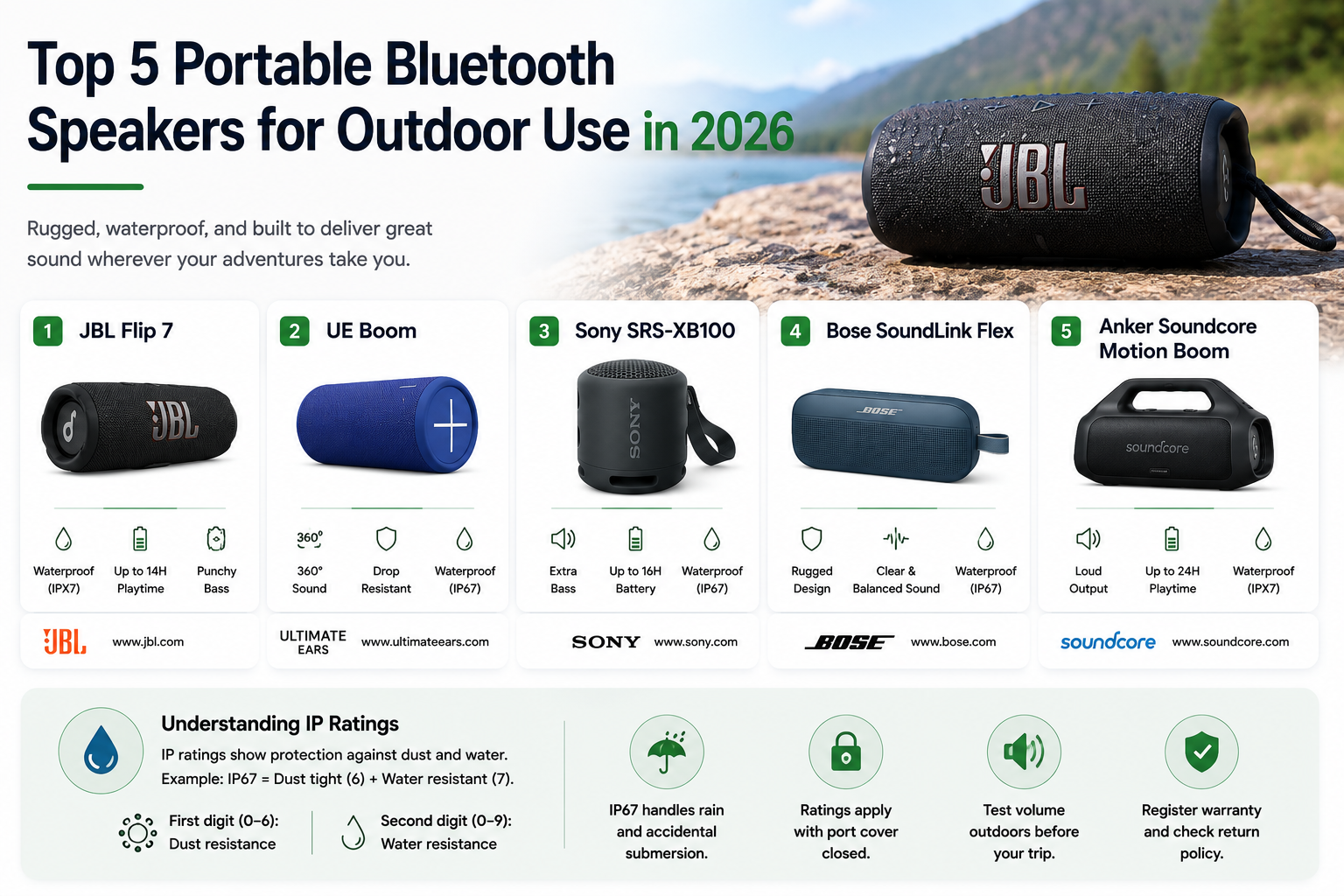
An outdoor Bluetooth speaker needs to handle a genuinely different set of demands than one sitting on a desk, surviving accidental splashes, sudden drops, sand, and a full day away from a charger while still sounding good enough to fill an outdoor space with sound. The category has matured considerably, with rugged build quality no longer meaning a compromise on actual audio performance the way it often did in earlier generations of outdoor speakers. Size and weight matter more than people expect too, since the speaker that actually makes it into a backpack is the one that gets used, regardless of how good it sounds on paper. Here are five portable Bluetooth speakers in 2026 built specifically to handle whatever the outdoors throws at them.
JBL Flip 7

The Flip series remains a benchmark for portable outdoor audio, with genuinely punchy bass, solid waterproofing, and a compact size that fits easily into a backpack side pocket without adding much weight to a day trip.
UE Boom

UE Boom’s 360-degree sound design fills outdoor spaces more evenly than speakers with directional audio, and its genuinely rugged, drop-resistant build has made it a longtime favorite for camping and beach trips.
Sony SRS-XB100

Sony’s XB series balances a compact, lightweight design with genuinely strong bass output for its size, and its long battery life makes it a solid pick for extended outdoor days without easy access to charging.
Bose SoundLink Flex
Bose brings its typically excellent sound tuning to a genuinely rugged outdoor form factor, with a built-in ledge design that lets the speaker stand upright or lie flat depending on the surface available.
Anker Soundcore Motion Boom

Soundcore’s Motion Boom line focuses on genuinely loud, party-ready output at a more affordable price point than premium competitors, appealing to users who prioritize volume and battery life over the most refined sound signature.
Understanding IP Ratings Before You Buy
IP ratings, written as something like IP67, describe genuine protection against dust and water, the first digit covers dust resistance on a scale of zero to six, and the second covers water resistance from splashes up to full submersion for a set time. For most outdoor use, an IP67 rating covers accidental submersion and heavy rain comfortably, but if a speaker is genuinely going near a pool or open water regularly, checking the exact submersion depth and duration in the rating matters more than just seeing the letters IP on the box. It’s also worth checking whether a rating applies with the charging port cover closed, since some speakers lose their water resistance entirely if that small door isn’t properly sealed before getting wet.
Outdoor speakers no longer force a real trade-off between durability and sound quality, and the five options above prove that a rugged, weatherproof build can still deliver genuinely satisfying audio for a day outside. JBL’s Flip 7 and Bose’s SoundLink Flex stand out as the strongest all-around picks, balancing sound quality, durability, and portability better than most competitors in this exact category. Whichever you pick, register the warranty and check the return policy, rugged doesn’t always mean indestructible, and it’s worth having recourse if a speaker fails earlier than expected. Testing the speaker’s actual volume outdoors before a big trip is also worth doing, indoor demos rarely reveal how sound carries in open air. Open outdoor spaces swallow sound far more than a living room ever would, so what feels plenty loud indoors can feel surprisingly quiet at a campsite or beach.