
Tracking a workout by feel alone, or worse, guessing at calories burned from a phone sitting in a gym bag, leaves a lot of genuinely useful data on the table that a proper fitness smartwatch captures automatically throughout the day. The category has matured well past simple step counting, with continuous heart rate monitoring, sleep stage tracking, and recovery scoring that helps athletes and casual exercisers alike understand not just how hard they worked out, but how well their body is actually recovering from it. In 2026, battery life has also improved considerably across the category, with several models now lasting a full week or more between charges rather than requiring nightly charging that interrupts sleep tracking. Here are five smartwatches worth considering this year, depending on your fitness goals and existing phone ecosystem. Most also now support blood oxygen and skin temperature sensing, adding another data point toward understanding overall recovery beyond heart rate alone.
Apple Watch Series

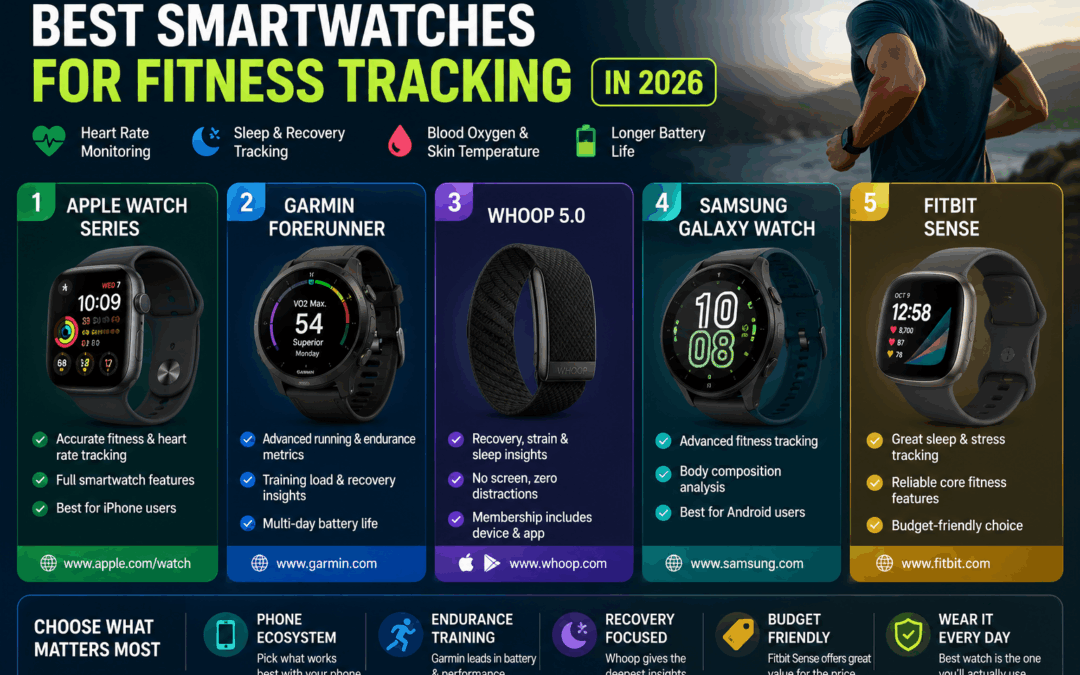
Apple Watch remains the most complete all-around option for iPhone users, combining genuinely accurate workout and heart rate tracking with full smartwatch functionality, though its battery life still requires nightly charging unlike some fitness-first competitors.
Garmin Forerunner

Garmin Forerunner targets serious runners and endurance athletes specifically, with genuinely detailed training load and recovery metrics plus multi-day battery life that survives long races and training blocks without needing a mid-week charge.
Whoop 5.0

Whoop skips a traditional screen entirely, focusing purely on recovery, strain, and sleep data delivered through its companion app, appealing to athletes who want deep physiological insight without a smartwatch’s typical notification distractions.
Download on Play Store | www.whoop.com
Samsung Galaxy Watch
Samsung Galaxy Watch pairs strong fitness tracking with the deepest smartwatch feature set available for Android users specifically, including body composition analysis that most competitors don’t offer directly on the wrist.
www.samsung.com/global/galaxy/galaxy-watch
Fitbit Sense
Fitbit Sense remains a strong budget-friendly option with solid sleep and stress tracking, appealing to users who want reliable core fitness metrics without paying premium prices for features they may never fully use.
Phone ecosystem still matters more than most fitness features when choosing a smartwatch, since Apple Watch requires an iPhone and Galaxy Watch works best paired with a Samsung or Android phone, narrowing the realistic choice before comparing fitness metrics at all. Serious endurance athletes training for races get more practical value from Garmin’s multi-day battery life and detailed training load metrics than from Apple Watch’s broader but shallower fitness feature set. Anyone specifically prioritizing recovery and strain data over traditional smartwatch notifications should consider Whoop’s screen-free approach, since it removes the distraction while still delivering some of the deepest physiological insight available. Budget-conscious buyers who mainly want reliable step counting, sleep tracking, and basic workout logging without premium pricing get solid value from Fitbit Sense rather than paying for smartwatch features they won’t regularly use. It’s also worth checking a specific model’s compatibility with third-party fitness apps you already use, since some ecosystems lock certain data behind their own proprietary app.
A good fitness smartwatch turns vague workout impressions into genuinely useful data about training load, recovery, and sleep quality that guesswork alone never could. Match your pick to your phone ecosystem first, then to your specific fitness goals, endurance training, recovery focus, or general activity tracking, since that combination matters more than any single spec comparison. The best fitness watch is ultimately the one you’ll actually keep wearing every day, not the one with the longest feature list on paper.