
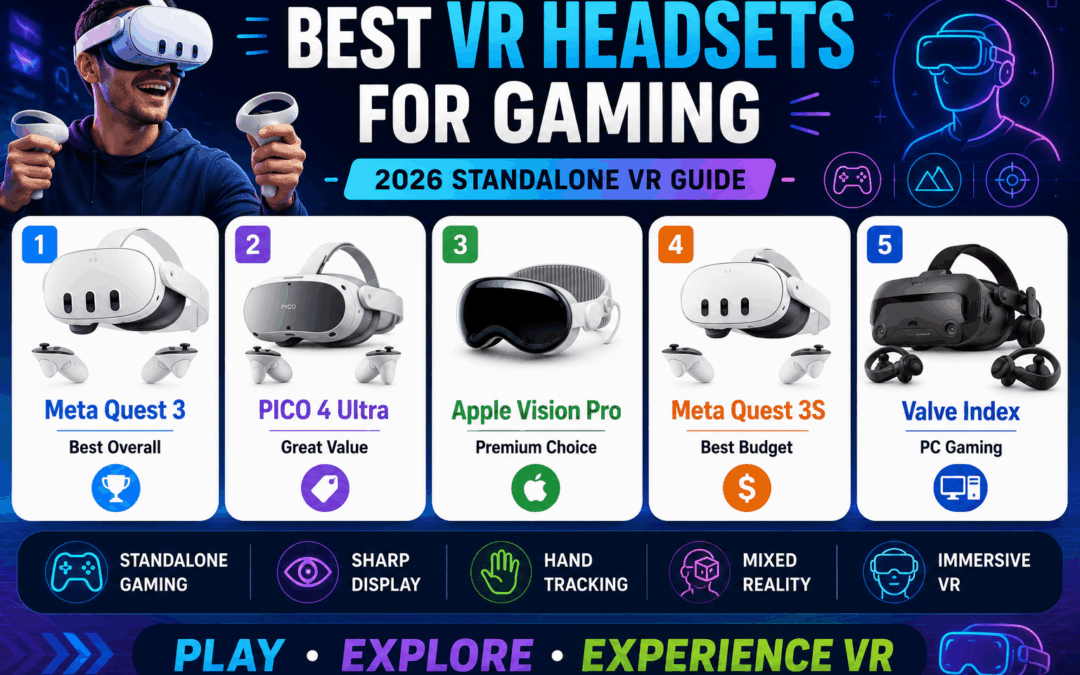
VR gaming used to require a genuinely expensive gaming PC tethered to a headset by a cable, a real barrier that kept the technology confined to enthusiasts willing to invest heavily in supporting hardware beyond the headset itself. Standalone VR headsets have removed that barrier almost entirely, packing enough processing power directly into the headset to run genuinely capable games without any external PC or console connection required at all. In 2026, the category has matured considerably, with sharper displays, more comfortable extended-wear designs, and a genuinely growing library of games built specifically to take advantage of standalone hardware rather than being scaled-down ports. Here are five VR headsets worth considering this year for genuinely immersive gaming. Most also support hand tracking without needing separate controllers, letting simpler games and social experiences feel more natural right out of the box.
Meta Quest 3
Meta Quest 3 remains the most widely adopted standalone VR headset, offering genuinely strong mixed reality passthrough alongside a large existing game library, making it a comfortable default choice for most newcomers to VR gaming.
PICO 4 Ultra
PICO 4 Ultra offers genuinely sharp display resolution and a comfortable, well-balanced design at a competitive price point, appealing to buyers who want strong visual quality without paying Meta’s premium pricing.
Apple Vision Pro
Apple Vision Pro delivers genuinely unmatched display sharpness and a premium build quality, though its significantly higher price and smaller dedicated gaming library position it more as a broader computing device than a pure gaming headset.
www.apple.com/apple-vision-pro
Meta Quest 3S
Meta Quest 3S trims some premium features from the standard Quest 3 to hit a genuinely more accessible price point, appealing to budget-conscious buyers who want to try standalone VR gaming without the full flagship investment.
Valve Index (Tethered Alternative)
For players willing to accept a PC tether in exchange for maximum performance, Valve Index remains a genuinely strong choice, offering superior tracking precision and refresh rates that standalone hardware still hasn’t fully matched.
Budget and existing hardware ecosystem should weigh heavily in this decision. Meta Quest 3 remains the safest general recommendation given its combination of strong hardware and the largest available game library, while Meta Quest 3S suits buyers specifically wanting a lower-cost entry point into standalone VR without a significant financial commitment upfront. PICO 4 Ultra is worth serious consideration for buyers prioritizing display quality and value over brand recognition or the largest possible game library. Apple Vision Pro suits buyers who want a premium, multi-purpose computing device with VR gaming as one capability among several others, rather than buyers purely focused on gaming performance and library size. Players with an existing powerful gaming PC and who prioritize absolute peak performance over standalone convenience should still seriously weigh a tethered option like Valve Index against the standalone alternatives.
Standalone VR has genuinely matured past its early awkward phase into hardware capable of delivering real immersive gaming without a single external cable or expensive supporting PC. Match your pick to your budget and whether you want a pure gaming device or a broader multi-purpose headset, since that distinction matters more than chasing the single sharpest display spec on a comparison chart. Trying a headset in person for at least fifteen minutes before buying, if at all possible, reveals comfort issues no spec sheet ever mentions.