A smart home tends to accumulate devices from several different brands over time, a smart plug here, a video doorbell there, each with its own separate app, until managing the whole setup becomes genuinely more complicated than the convenience it was supposed to provide. Smart home hubs and displays solve this fragmentation directly, giving a single control point, often with voice commands and a touchscreen, that can manage devices across different brands and ecosystems without needing to open five separate apps just to turn off a light. In 2026, most hubs have also embraced the Matter smart home standard, meaningfully improving cross-brand compatibility that used to require checking compatibility lists carefully before every purchase. Here are five smart home hubs and displays worth considering this year. Most also support offline local control for at least basic functions, meaning a brief internet outage doesn’t necessarily leave every connected light switch unresponsive.
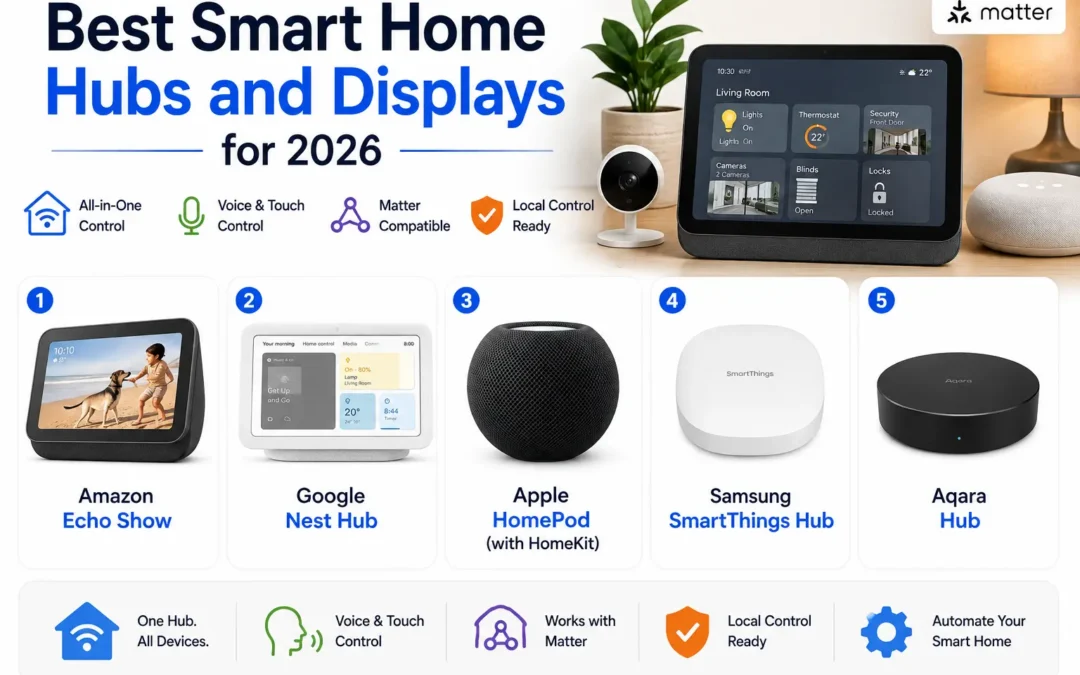
Amazon Echo Show
Amazon Echo Show combines Alexa voice control with a genuinely useful touchscreen for video calls, recipe walkthroughs, and camera feed viewing, remaining the most widely compatible option given Alexa’s broad third-party device support.
Google Nest Hub
Google Nest Hub integrates tightly with Google’s broader ecosystem, offering genuinely strong photo frame functionality alongside smart home control, and its sleep tracking feature on the Nest Hub Max variant adds a genuinely useful bonus capability.
store.google.com/product/nest_hub
Apple HomePod (with HomeKit)
Apple HomePod paired with the Home app offers genuinely tight integration for iPhone users specifically, with strong privacy-focused design, though its smart home device compatibility remains somewhat narrower than Alexa or Google’s broader ecosystems.
Samsung SmartThings Hub
Samsung SmartThings Hub focuses specifically on genuinely robust cross-brand device compatibility and automation depth, appealing to more technical users who want granular control over complex automations rather than simple voice commands alone.
Aqara Hub
Aqara Hub offers a genuinely affordable, no-screen option focused purely on connecting and automating smart devices through Matter and other protocols, appealing to users who want the backend hub functionality without paying for a display they may not need.
Existing phone ecosystem should weigh heavily in this decision before comparing hub features directly, since Apple HomePod integrates far more smoothly for iPhone users while Google Nest Hub does the same for Android users already invested in Google’s services. Users with a genuinely mixed collection of smart home brands benefit most from Samsung SmartThings’ broader compatibility and deeper automation options, since it wasn’t built around promoting one company’s own device ecosystem exclusively. Anyone who mainly wants smart home control without needing video calling or a photo frame display should consider Aqara Hub’s simpler, screen-free approach, avoiding paying for display hardware that would otherwise go unused. The continued rollout of the Matter standard is worth checking specifically against any device you’re considering, since Matter compatibility increasingly matters more for future-proofing a smart home setup than which specific hub brand is chosen.
A good smart home hub genuinely earns its place by replacing five separate apps with one simple control point, turning a fragmented collection of devices into something that actually feels convenient rather than like extra homework. Match your pick to your existing phone ecosystem and how mixed your current device brands already are, since that combination matters more than any single hub’s individual feature list. A smart home should feel simpler than the sum of its separate devices, not more complicated, and the right hub is what actually delivers on that promise.