
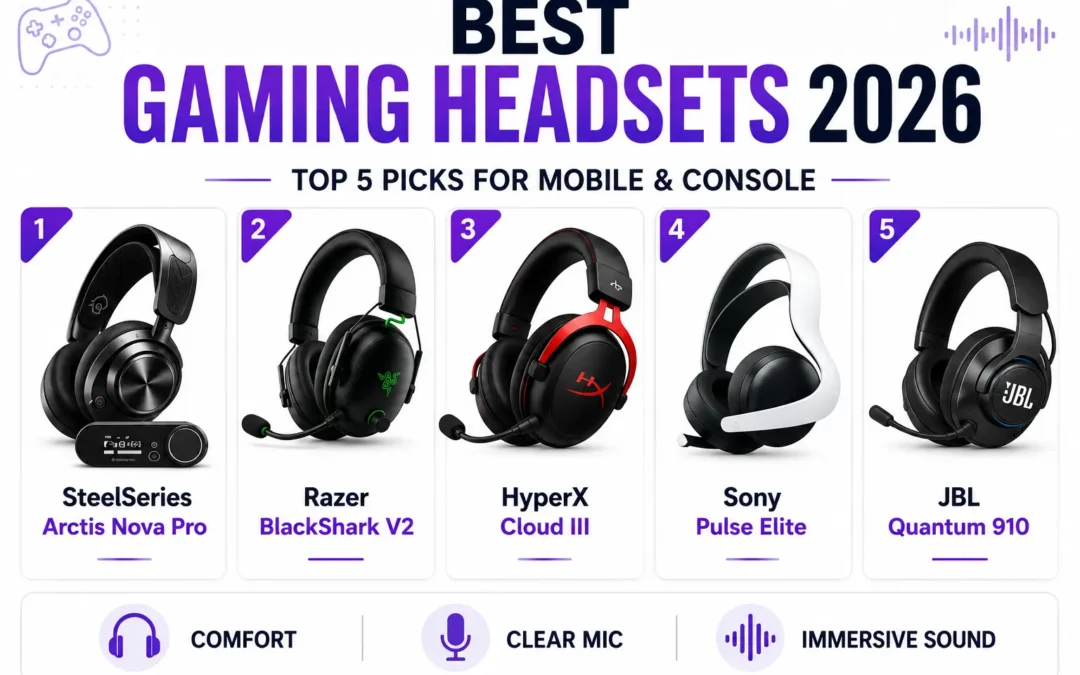
Competitive gaming genuinely rewards hearing an approaching opponent’s footsteps or a reload sound a half-second before seeing them, and a proper gaming headset delivers that positional audio detail in a way built-in phone or TV speakers simply can’t replicate. Beyond raw sound quality, a good gaming headset also needs a genuinely clear microphone for team communication and comfortable enough padding to survive a multi-hour session without the ears aching by the end. In 2026, the category spans everything from budget-friendly wired options to premium wireless headsets with genuinely low-latency connections built specifically for competitive play. Here are five gaming headsets worth considering this year, depending on your platform and budget. Most also feature detachable or flip-to-mute microphones, a small design detail that matters more than expected once you’re actually using one for hours of daily team communication.
SteelSeries Arctis Nova Pro
SteelSeries Arctis Nova Pro delivers genuinely excellent sound clarity with a comfortable, all-day wearable design, plus multi-platform connectivity that lets the same headset move seamlessly between console, PC, and mobile devices.
Razer BlackShark V2
Razer BlackShark V2 focuses specifically on competitive esports-level audio clarity, with a genuinely detailed soundstage that makes pinpointing enemy positions in a shooter noticeably easier than with more bass-heavy consumer headsets.
HyperX Cloud III
HyperX Cloud III balances genuinely comfortable memory foam padding with reliable, clear audio at a more accessible price point, making it a strong value pick for players who don’t need every premium feature a flagship headset offers.
Sony Pulse Elite
Sony Pulse Elite integrates tightly with PlayStation’s 3D audio technology, delivering genuinely immersive positional sound specifically optimized for PlayStation console gaming rather than being a general cross-platform headset.
JBL Quantum 910
JBL Quantum 910 pairs strong wireless performance with head-tracking spatial audio, adjusting the soundstage based on head movement for a more immersive sense of directional sound in supported games.
Platform compatibility should weigh heavily in this decision before comparing raw audio quality, since Sony Pulse Elite’s tight PlayStation integration won’t deliver the same specialized benefits on Xbox or PC compared to a genuinely cross-platform option like SteelSeries Arctis Nova Pro. Competitive shooter players who prioritize pinpointing exact enemy positions over rich, bass-heavy sound should lean toward Razer BlackShark V2’s more clinical, detail-focused audio profile. Budget-conscious buyers who mainly want reliable comfort and clear communication without every premium feature get strong value from HyperX Cloud III rather than paying for capabilities like head tracking they may never fully use. Mobile gamers specifically should confirm a shortlisted headset supports a reliable low-latency Bluetooth connection, since some wireless headsets designed primarily for console use introduce noticeable audio lag when paired with a phone instead. It’s also worth checking a headset’s weight specifically if you wear glasses, since heavier over-ear designs can cause real discomfort behind the ears during longer sessions.
A genuinely good gaming headset closes the gap between hearing a threat and reacting to it, an advantage that becomes obvious the moment you switch from phone speakers to detailed positional audio. Match your pick to your primary gaming platform and how much you value comfort versus audio precision, since that combination matters more than chasing the single most expensive option on a shelf. A headset that’s genuinely comfortable for hour four of a session beats one that only impressed you in the first ten minutes trying it on.