Reading for hours on a backlit phone or tablet screen genuinely strains the eyes in a way a dedicated E Ink e-reader simply doesn’t, and the category has matured considerably in 2026 with genuinely improved screen contrast, faster page turns, and broader file format support across every major brand. Here’s how this year’s strongest e-readers compare.
Amazon Kindle Paperwhite
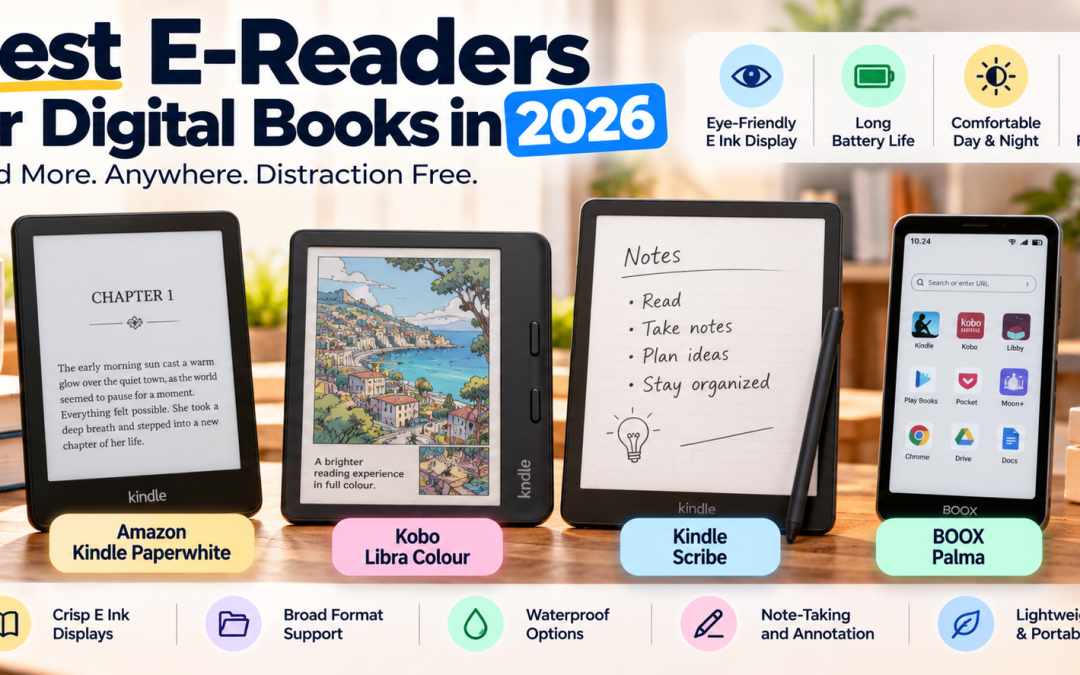
The Amazon Kindle Paperwhite remains the most widely recommended e-reader for most readers, offering a genuinely crisp, high-contrast E Ink display alongside seamless integration with Amazon’s massive Kindle ebook store and library lending through supported public library apps. Its adjustable warm light lets readers shift the screen’s color temperature for comfortable nighttime reading, and its waterproof rating makes it genuinely safe to use near a pool or in the bath without real worry. Its main limitation remains its closed ecosystem, favoring Amazon’s own book format and making it somewhat less flexible for readers who want to load books from a wider variety of outside sources.
View on Play Store | View on App Store
Kobo Libra Colour
The Kobo Libra Colour stands out specifically for its genuine color E Ink display, letting readers see comic book covers, illustrated children’s books, and graphic novels in actual color rather than the grayscale that defines most e-readers in this category. Its broader native file format support, including EPUB directly without needing a conversion step, makes it genuinely more flexible for readers who borrow ebooks from a public library or purchase from retailers outside Amazon’s ecosystem. For readers who specifically want color display capability or broader format flexibility beyond Amazon’s closed system, it remains one of the strongest alternatives available.
Kindle Scribe
The Kindle Scribe extends the e-reader concept into genuine note-taking territory, pairing a larger 10.2-inch E Ink display with a stylus that lets readers annotate directly within books or take handwritten notes on a blank digital page. Its combination of reading and writing in a single device appeals specifically to students and professionals who want to mark up documents or jot down notes without needing a separate tablet or notebook alongside their e-reader. For anyone who specifically wants genuine handwriting capability layered on top of standard e-reader functionality, it remains one of the more distinctive options in the category.
BOOX Palma
The BOOX Palma takes a genuinely unusual approach, packing a full E Ink display into a phone-sized form factor running Android, letting users install any reading app, including library apps and comic readers, directly onto the device rather than relying on a single manufacturer’s proprietary ecosystem. Its genuinely pocketable size makes it easy to carry as a dedicated reading device without the bulk of a traditional larger e-reader, appealing specifically to readers who want maximum app flexibility in the smallest possible form factor. For readers who want to run multiple different reading apps and library services on a single E Ink device, it remains one of the most flexible options available.
Choosing between these four largely comes down to ecosystem preference and specific reading needs beyond basic text. Most readers wanting the simplest, most widely supported experience should default to the Kindle Paperwhite, while anyone specifically wanting color illustrations or broader library format flexibility should consider the Kobo Libra Colour instead. Students and professionals wanting genuine note-taking and annotation capability should invest in the Kindle Scribe, and readers who want maximum app flexibility across multiple reading services in the smallest form factor should look to the BOOX Palma.
Conclusion
A dedicated e-reader remains one of the more genuinely restful technology purchases available, trading a phone’s constant notifications and eye strain for a calmer, purpose-built reading experience. Whichever of these four ends up fitting a specific reading habit and ecosystem preference, the underlying payoff remains the same: hours of genuinely comfortable reading without the fatigue a backlit screen eventually produces.