
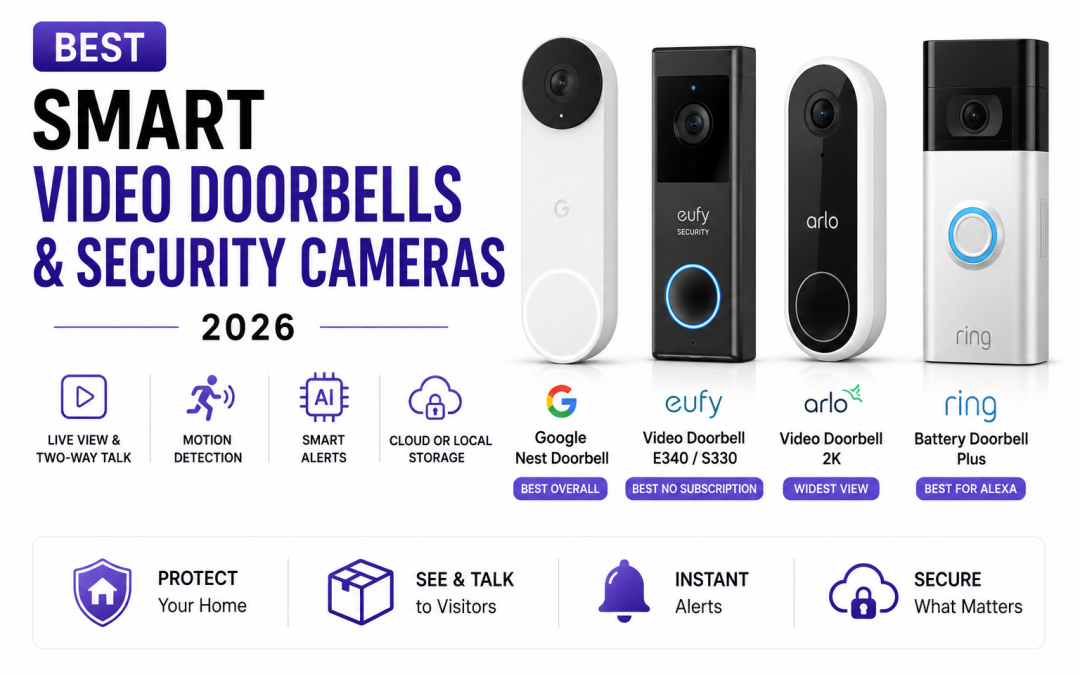
Choosing a video doorbell used to be straightforward, but the category has grown genuinely complex in 2026, spanning resolution formats, subscription tiers, radar-based motion detection, AI-powered visitor classification, and a real divide between cloud-dependent and fully local, subscription-free storage. If home security is the one thing worth improving without installing a full monitored system, a video doorbell remains one of the highest-value single upgrades available, delivering surveillance, two-way talk, and motion alerts in one compact, relatively affordable package. Here’s how 2026’s strongest options actually compare.
Google Nest Doorbell (Battery)
The Google Nest Doorbell has emerged as the strongest all-around pick in independent testing, combining a sleek design with flexible battery or wired power options and genuinely useful smart features like familiar face detection, which learns tagged faces and can notify a homeowner by name, such as recognizing a specific family member, rather than a generic motion alert. That familiar face detection works entirely free, though full video history beyond roughly three hours of event clips requires a Nest Aware subscription starting around $8 a month. Its package detection and thoughtful activity zone configuration round out a feature set that reviewers consistently rank as the most complete and smart of any doorbell currently on the market.
View on Play Store | View on App Store
Eufy Video Doorbell E340 / S330

Eufy’s doorbell lineup has become the go-to recommendation across smart-home communities specifically for buyers who refuse to pay a monthly subscription, since features that Ring and Nest gate behind paid plans, 2K video recording, package detection, person detection, and facial recognition, come included at no extra cost. Video is stored locally on Eufy’s HomeBase unit rather than in the cloud, which both avoids subscription fees and keeps footage under the homeowner’s own physical control, though it does mean a stolen or destroyed HomeBase could mean losing recorded history unless an optional paid cloud backup is also enabled. For buyers who specifically want full-featured security without an ongoing monthly bill, Eufy remains the clearest subscription-free option available.
Arlo Video Doorbell 2K
Arlo’s Video Doorbell 2K stands out specifically for its unusually wide 180-degree field of view, the widest on the market among comparable doorbells, which captures visitors standing off to the side that would be completely invisible to a Ring or Nest camera’s narrower angle. At $59.99, it costs less than many competitors charge just for a replacement battery, and its 2K resolution at that price point remains genuinely impressive relative to the rest of the category. Arlo Secure, which unlocks cloud recording, starts at a relatively low $2.99 to $4.99 a month after a 30-day free trial, and some features require an Arlo SmartHub or compatible base station, adding $50 to $80 to the initial setup cost if a household doesn’t already own one.
Ring Battery Doorbell Plus

Ring remains the most recognizable and widely adopted name in the category, and the Battery Doorbell Plus continues that legacy with straightforward setup, a USB-rechargeable battery that slides out without tools, and deep integration with Amazon’s Alexa ecosystem and the broader Ring app that many households already use for other cameras or a security system. Its core live view and motion alerts work without a subscription, though most of Ring’s smart features, person detection, package alerts, and video history, require a Ring Protect plan. For households already invested in Ring’s broader ecosystem of cameras and alarm hardware, sticking with Ring’s doorbell line keeps everything unified under a single app and subscription rather than juggling separate platforms.
The clearest way to choose among these four is by how much an ongoing subscription actually bothers a household. Buyers who specifically want to avoid a monthly fee while still getting a full smart feature set should default to Eufy’s local-storage lineup, while anyone who wants the single most polished, feature-complete smart doorbell and doesn’t mind a modest subscription should go with the Google Nest Doorbell. Arlo remains the strongest budget pick specifically for its unusually wide field of view, and Ring makes the most sense for households already invested in Amazon’s Alexa and broader Ring security ecosystem rather than starting from scratch with a new platform.
Conclusion
A video doorbell remains one of the single highest-value home security upgrades available, delivering real peace of mind, package protection, and visitor awareness for a fraction of the cost of a full monitored security system. Whichever of these four ends up being the right fit, the category’s growing subscription-free options mean homeowners no longer have to accept an ongoing monthly bill just to get genuinely smart security features at the front door.