
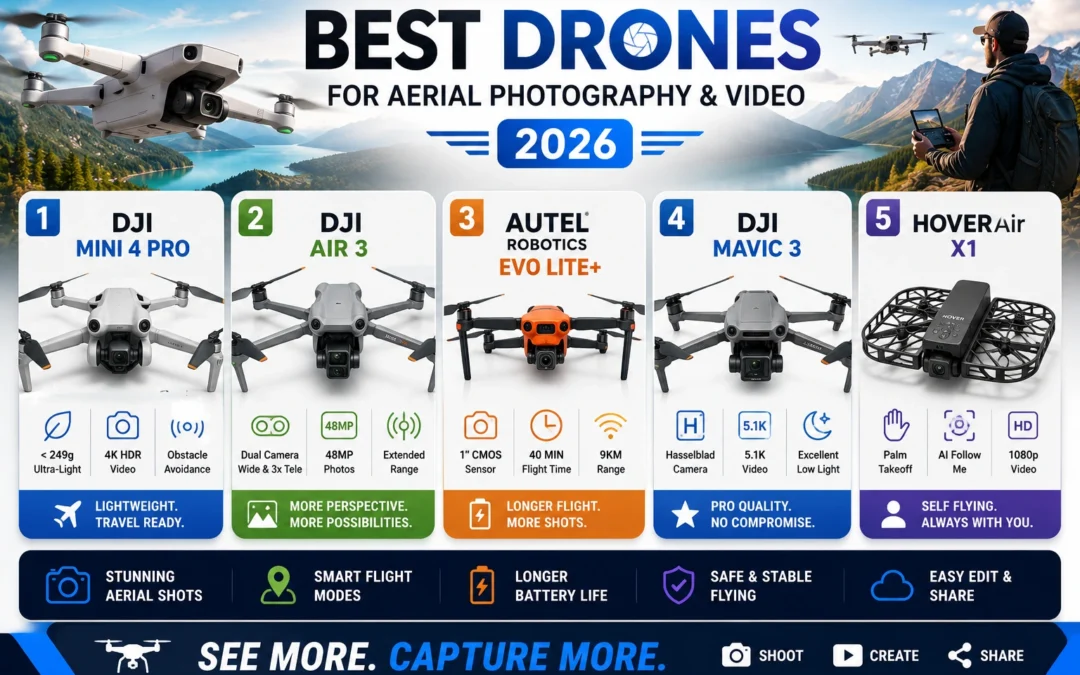
An aerial perspective genuinely transforms photography and video in a way that’s hard to replicate any other way, revealing landscape scale and composition that a ground-level shot simply can’t capture. Drones have gotten considerably more capable and accessible in recent years, with compact folding designs that travel easily, genuinely stabilized 4K video, and obstacle avoidance that meaningfully reduces the risk of an expensive crash for less experienced pilots. Here are five drones worth considering this year for genuinely stunning aerial photography and video, whether for travel content, real estate, or simple creative hobby use. Most also include automated flight modes, letting a drone fly a preset orbit or tracking pattern around a subject automatically rather than requiring precise manual piloting for every single shot.
DJI Mini 4 Pro
DJI Mini 4 Pro packs genuinely impressive 4K camera quality and obstacle avoidance into an ultra-lightweight, travel-friendly frame that falls under weight limits requiring drone registration in many regions.
DJI Air 3
DJI Air 3 offers genuinely more advanced dual-camera capability with both wide and telephoto lenses, appealing to more serious content creators who want compositional flexibility beyond a single fixed focal length.
Autel Robotics EVO Lite+
Autel Robotics EVO Lite+ offers genuinely strong image quality and a notably longer flight time than some competitors, appealing to buyers who want extended aerial sessions without frequent battery swaps.
DJI Mavic 3
DJI Mavic 3 targets genuinely professional users needing the highest image quality and longest range, with a larger sensor that produces noticeably better low-light and dynamic range performance than more compact consumer drones.
HOVERAir X1
HOVERAir X1 emphasizes genuinely simple, autonomous self-flying capability, launching from a hand and following a subject automatically, appealing to users who want easy aerial selfies and action shots without manual piloting skill.
Specific use case and skill level should guide the choice more than raw spec comparisons alone. Casual travelers and hobbyists wanting an easy-to-pack, beginner-friendly drone should prioritize DJI Mini 4 Pro’s lightweight, regulation-friendly design. Serious content creators wanting compositional flexibility across multiple focal lengths benefit from DJI Air 3’s dual-camera setup. Professional photographers and filmmakers needing the highest possible image quality should invest in DJI Mavic 3 despite its higher price and larger size. Users specifically wanting effortless, hands-off aerial footage without learning manual piloting should consider HOVERAir X1’s autonomous following capability over a traditional manually piloted drone. It’s genuinely worth checking local drone registration and no-fly zone regulations before any first flight, since rules vary considerably by region and ignorance of them doesn’t prevent a real fine. It’s also worth budgeting for at least one spare battery beyond whatever comes standard, since typical flight times of twenty to thirty minutes per charge fill up faster than most first-time buyers expect during an actual shoot.
A good drone opens up genuinely new creative possibilities for photography and video that ground-level shooting simply can’t replicate, and the category has become considerably more accessible without sacrificing real image quality. Match your pick to your actual skill level and specific creative goals, and always check local flight regulations first, since a great shot isn’t worth a genuine legal problem afterward. Practicing basic maneuvers in a genuinely open, empty area before attempting anything ambitious also saves real money on potential repairs down the line, since drones are considerably more forgiving to learn on than they are to fix after a preventable crash.